Join us

Path traced.
Live.
On one GPU.

VTWO is a node workspace for live visuals. Wire a few nodes, let real light do the rest, and play every part of the picture while it is on screen.

  • Windows now
  • Linux very soon, with every feature
  • Mac very soon, with its own denoisers

All rendered in VTWO. All available now.prompted: built by an AI agent

60fpsat 1080p, on an RTX 3090.4K is possible on an RTX 5090.
0frames path traced since you opened this page, at 60 a second.
0 h 00 minof render time saved. That is how long the same frames take at a minute each, the pace of an offline renderer.

60 frames a second at 1080p is our own measurement on an RTX 3090, not a benchmark. 4K on an RTX 5090 is what we expect; we have not measured it yet. Every picture on this page was rendered in VTWO 0.6.8.
Two engines in one room.

R4D draws the light. EVO moves the matter. They run in the same process, on the same graphics card, so what the physics does this frame is lit this frame.

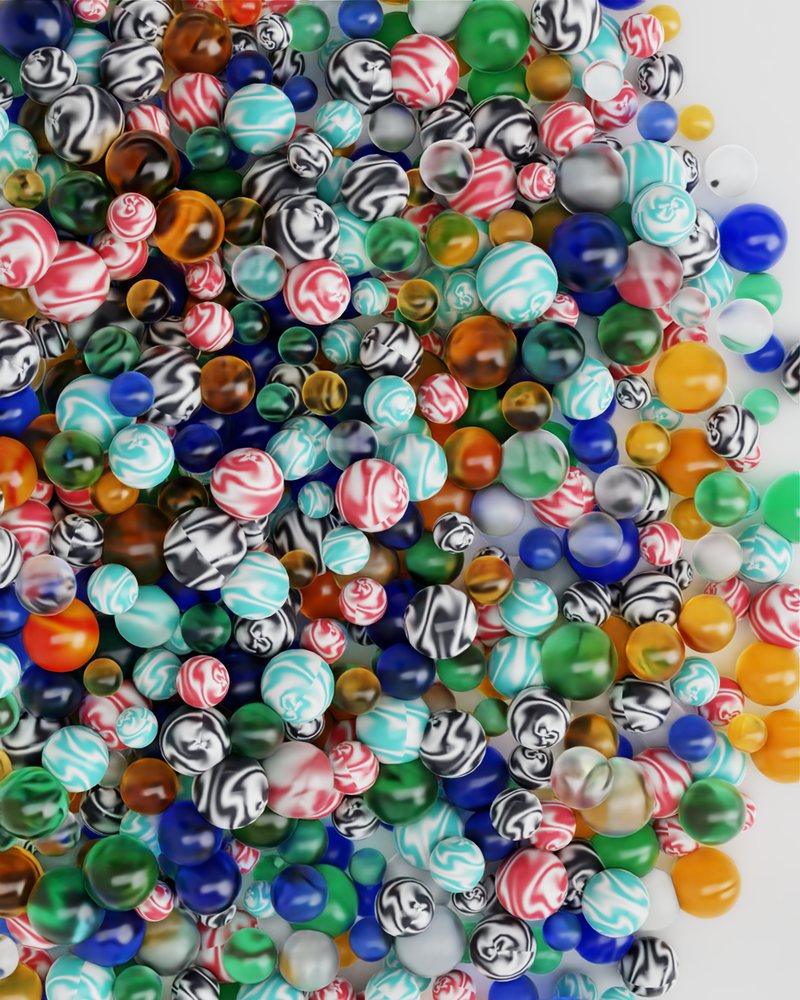
Hundreds of glass and glazed marbles, rendered in VTWO

R4D is a real path tracer, running live.

No baked lighting and no render button. R4D follows light the way it travels, bounce after bounce, and DLSS 4.5 rebuilds every frame, so the picture you work on is the finished picture.

  • Global illuminationLight bounces off everything onto everything else, up to 32 times.
  • CausticsAny glass, any light. A million caustic rays in half a millisecond.
  • Coloured shadowsTinted glass casts tinted, see-through shade.
  • DispersionGlass splits white light into colour.
  • Fog and occlusionHaze, shafts of light, and corners that darken by themselves.
  • Ground TruthOne switch to the unassisted reference, when you want to check the live picture against it.

60 frames a second at 1080p on an RTX 3090: a card from 2020, not a $10,000 server. 4K is possible on an RTX 5090.

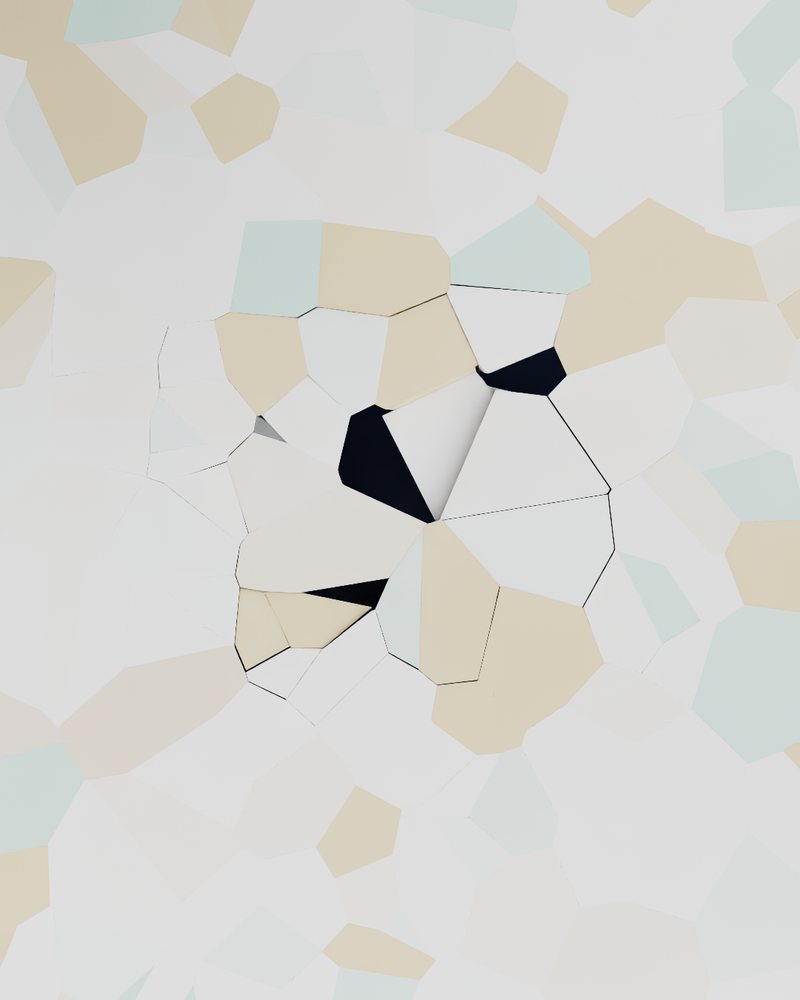
A tiled slab cracking apart, rendered in VTWO

EVO is physics you can perform with.

A full physics engine on the GPU, wired into the graph like any other node. Add a World and everything you mark as a body starts to fall, collide and settle, while you keep changing it.

  • Rigid bodiesUp to 16,384 in one world: dynamic, static, kinematic, held or free. Friction, bounce and damping change live.
  • FracturePieces breaks any shape apart, hands the shards to the simulation, and saves the break with the project.
  • Ropes and soft bodiesRopes, cables and chains, and bodies that squash and spring back.
  • ForcesWind, attract, repel, vortex, noise, flow and wave, plus gravity in any direction, springs, drag and Recall.
  • GrowthGROW and EVOLVE raise branching, reacting forms from a single path or mesh.
  • RepeatableThe same scene plays the same way every time, so a show can rely on it.

8,001 rigid bodies solve in 1.2 milliseconds a step, leaving the rest of the frame for the light.

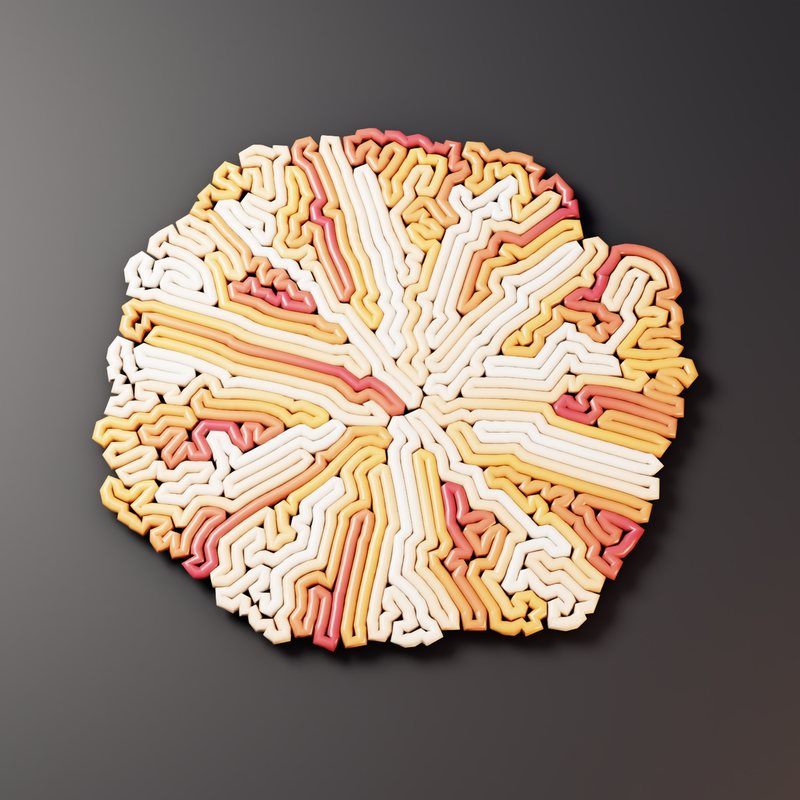
A coral-like form grown from one path, rendered in VTWO

One shape, four ways to read it.

Every source in VTWO offers itself four ways, each with its own colour of wire. There is nothing to convert: plug a node in and it takes the kind it wants, or pick one yourself.

GeometrySurfaces you can light.
PointsPlaces to put things.
FieldsValues that fill space.
PathsLines to sweep, grow and follow.

The picture here is one path, grown, then swept into tubes. Six nodes.

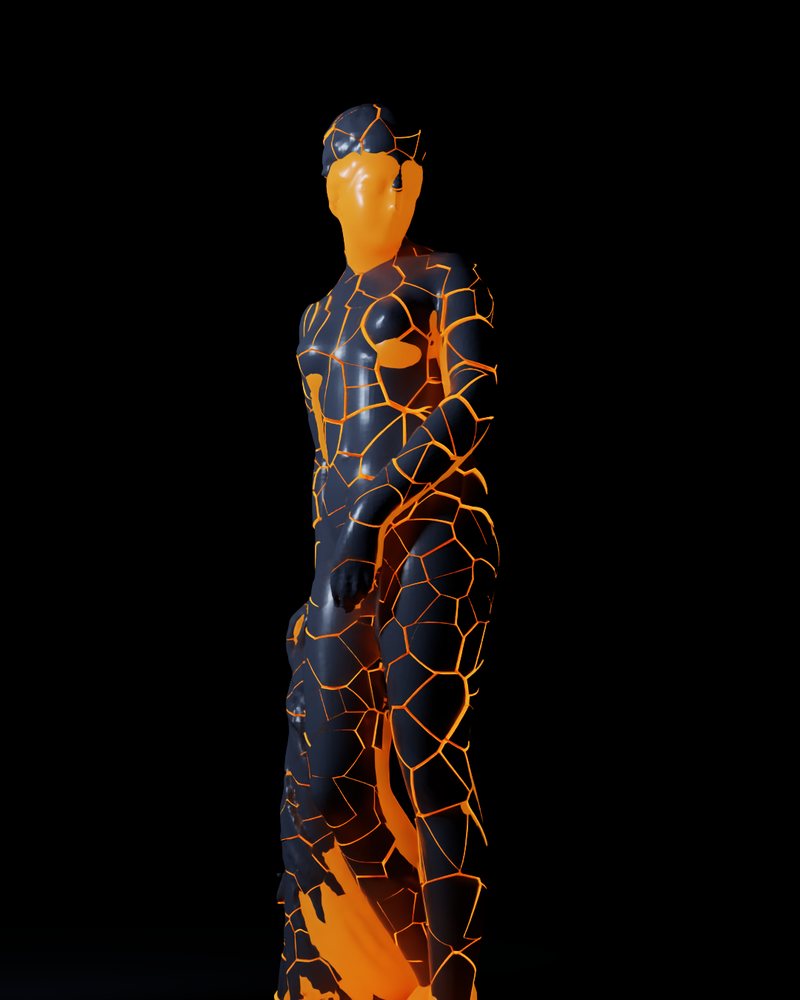
A statue with a cracked stone skin over a glowing core, rendered in VTWO

Import once. VTWO derives the rest.

Bring in an OBJ, glTF or FBX and VTWO works out, in the background, every form of it you are going to need. It does that once, keeps the result, and hands it to whichever node asks.

  • Derived dataFrom one mesh: its surface, its points, a field around it, and its edges as paths.
  • Any kind, any nodeClone onto its points, grow along its paths, push things with its field, light its surface. One import, four wires.
  • Ready for mappingBring in the building, the stage or the object you will project on, and it is the surface OUTPUT maps to.
  • Ready for physicsCollision shapes come with it: hull, box, sphere, or the true surface.
  • Baked oncePrepared in the background and reused every time the scene opens.

This statue is one Import. Turned to clay, meshed twice and fractured, it is ten nodes.

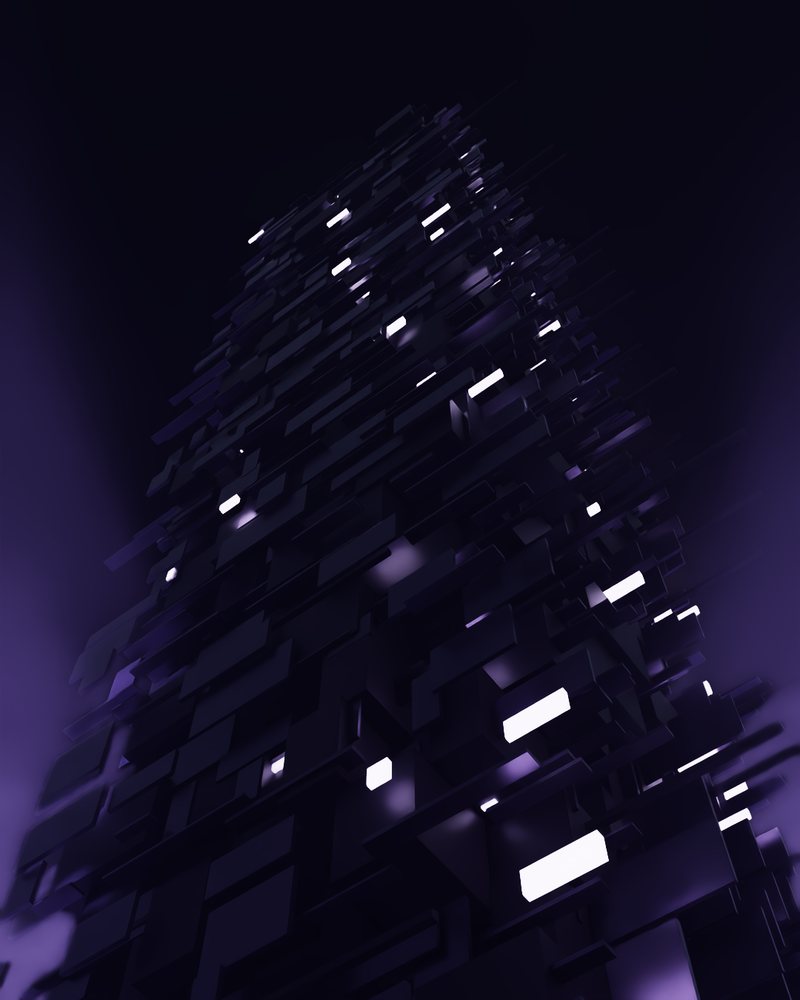
A dark tower of stacked blocks, rendered in VTWOProgram
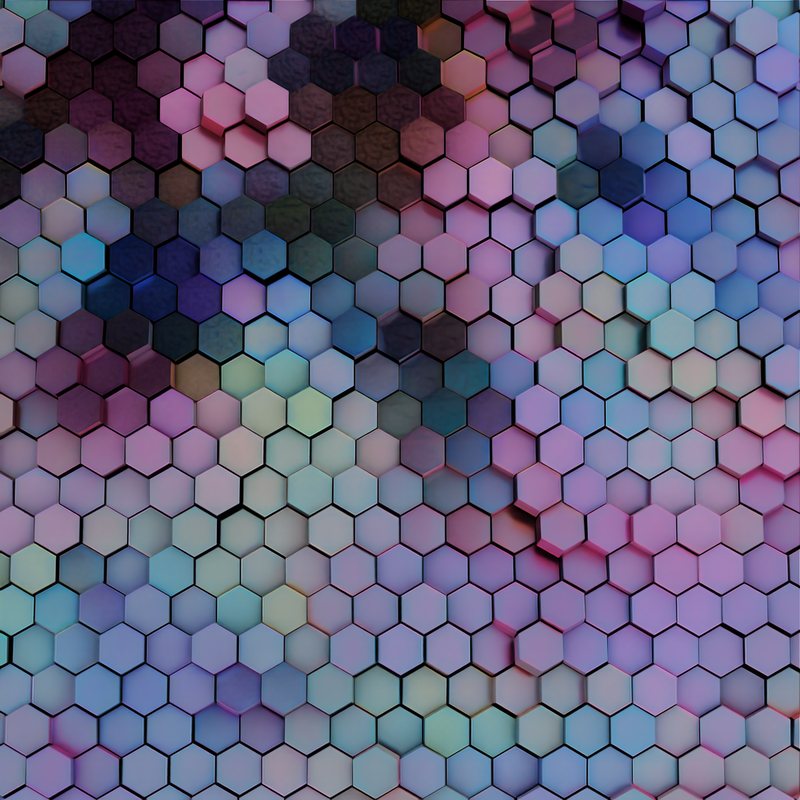
A field of coloured hexagons, rendered in VTWOPreview

Two scenes rendering. One fade apart.

R4D path traces two scenes at the same moment: the one on air and the one you are about to bring in. Fade between them and both stay live all the way across.

  • Program and PreviewTwo complete scenes, both lit and moving, side by side.
  • Switch and fadeCut, or fade the next scene in on a timer, with nothing frozen underneath.
  • Keep your viewportWhile the outputs run, the working view stays on screen, so you keep building during the show.
  • Straight to the surfaceDisplays, Spout and NDI, with alpha, from the same frame.

47 frames a second with one scene on air, 32 with a second one live beside it.

A few nodes. That is the whole trick.

Drop a node in and it already does something worth looking at. Wire in a second and the picture is yours. A first-timer gets there in three nodes; the same nodes go as generative, procedural and strange as you care to push them.

Marble spill, rendered in VTWO

Each picture with the graph an agent built for it over MCP, in the app's own colours, read straight out of the project file. The frames are the systems the scene is built from. Lights, cameras and the physics world stand to the right of the Output as auto nodes: they connect to it by themselves, so they never get in the way of the chain you are building.

Made to be played.

Any number on any node can be driven, and everything keeps computing while you drive it. This is an instrument for a room full of people, not a renderer you wait on.

The world outside

What happens in the room moves the picture.

  • Audio
  • MIDI
  • OSC
  • Sensors
  • Body, hand and face tracking

Signals inside

Motion without keyframes, on any parameter.

  • LFO
  • Noise
  • Step sequencer
  • Trigger
  • Expressions
  • Keyboard and mouse

The DECK

Line scenes up, then switch and fade between them.

  • Switch scenes live
  • Fade the next scene in
  • Program and Preview
  • Freeze and blackout
  • Panels you dock, float and save

Video in and out

Straight from the graphics card, with alpha.

  • Spout
  • NDI
  • GPU outputs

Any surface. No second program.

Because everything in VTWO is 3D, the venue sits in the scene with you. Plan the show in previz, let a guided set-up do the rigging, and send the picture out from the same program.

has a guided set-up. Point at a surface to see it in previz.

    Built now, for how people work now.

    Most creative software was designed before anyone talked to their tools. VTWO was designed after.

    The askA tiled slab that cracks apart.What the agent did, over MCP
      The graph it left you
      Tile collapse, rendered in VTWO
      The picture
      NowMCP, built in

      VTWO runs its own MCP server. Any agent can open a scene, build in it and see the render.

      appstategraphcapturescreenshotui
      NowAn API for everything

      Every node, parameter and wire has an address a script can read and set.

      /marble/pour   countX            7
      /sim/world     gravityMagnitude  9.81
      /scene/output  width             1080
      SoonPrompt inside VTWO

      Type what you want, in the app, and watch the graph build.

      ThenBuild new nodes in the app

      Describe the node you are missing and get it.

      Also on the way: image to 3D model, photogrammetry, and segmentation for texturing.

      We learn from the best.

      • TouchDesignerhow to curate, respect and build an audience.
      • Houdinihow to innovate and stay on the cutting edge.
      • Blenderhow to be free.

      We will work with everyone.

      • PluginsVTWO inside the tools you already run, with workflows ready to go.
      • Tie-insAuragen, TouchDesigner and Unreal Engine, wired straight in.
      • Engine sharingOne picture passed between engines, live.

      VTWO is built by artists, designers and coders from live entertainment, interactive and immersive media, and cutting-edge technology.

      Share ten scenes. Your next month is on us.

      Make ten scenes public in a month and show them around. When two get remixed, your next month is free.

      What VTWO costs

      Past the reserve, we give it away.

      VTWO keeps $100,000 in reserve and no more. Profit above that is donated, and you vote on where it goes.

      EnvironmentLobbyingRelief for people in needAgainst war
      See the reserve

      For now, VTWO is for friends and family.

      There is no open sign-up yet. Tell us who you are and what you make.

      Join us
      VTWO · build 0.6.8This page describes VTWO as it ships at launch. The beta is not open to the public yet.Made by REM
      })();